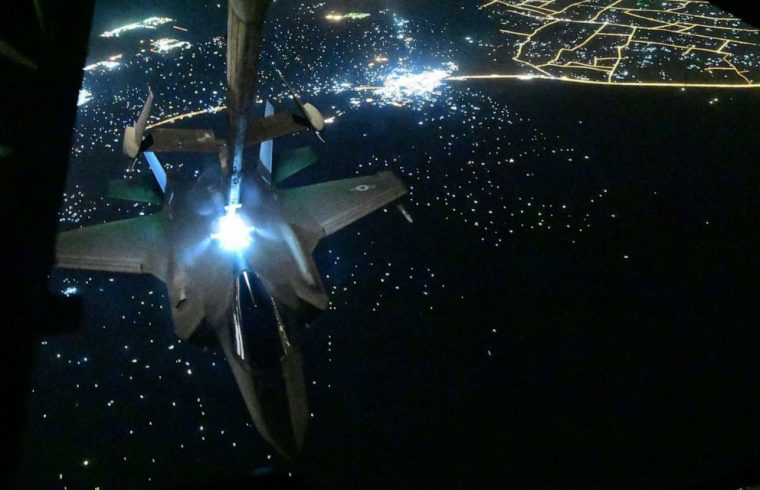
The U.S.-led coalition conducted airstrikes against an Islamic State “infested” island in Iraq on Tuesday in order to deny what had become a safe haven for the terror group, according to Operation Inherent Resolve.
Interested in ISIS?
Add ISIS as an interest to stay up to date on the latest ISIS news, video, and analysis from ABC News.
U.S. F-15 and F-35 aircraft dropped 80,000 pounds of munitions on Qanus Island, located in the Salah ad Din Province, north of Baghdad, to disrupt ISIS fighters‘ “ability to hide in the thick vegetation,” the coalition said in a statement.
“Follow-on ground clearance operations are currently taking place by the 2nd Iraqi Special Operations Forces Battalion to destroy a major transit hub for [ISIS] members moving from Syria and the Jazeera desert into Mosul, Makhmour, and the Kirkuk region” of Iraq, the coalition said.
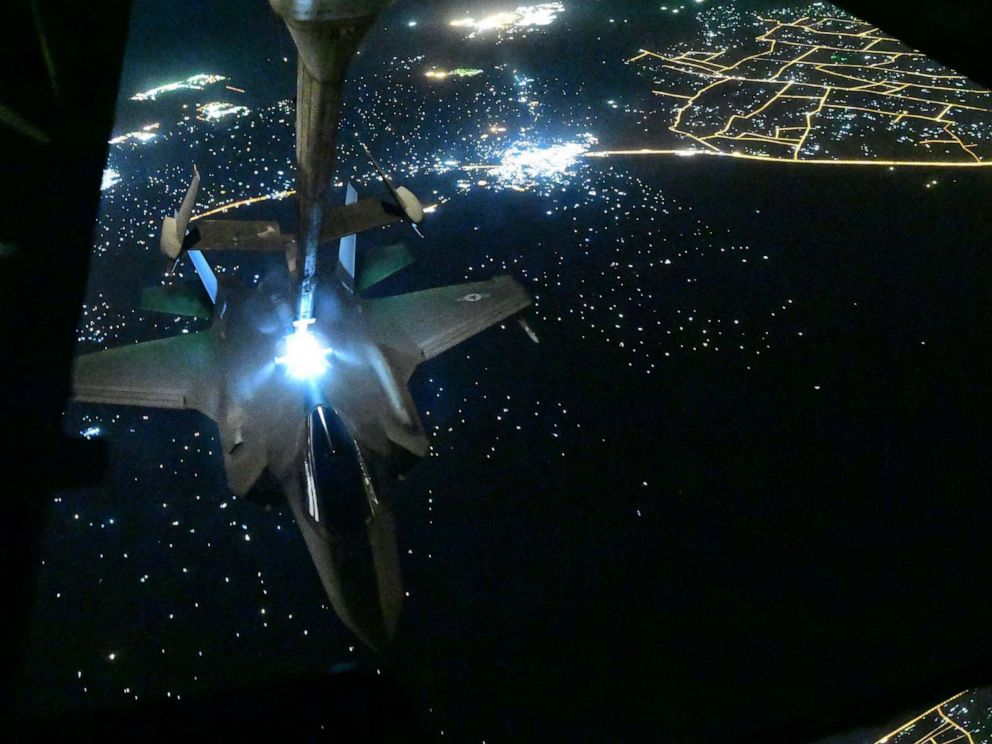 U.S. Air Force
“We’re denying Daesh the ability to hide on Qanus Island,” Maj. Gen. Eric Hill, the commander of the coalition’s special operations forces, said in the statement, referring to the group by its Arabic acronym. “We’re setting the conditions for our partner forces to continue bringing stability to the region.”
Months after losing their self-declared caliphate across Iraq and Syria, thousands of ISIS fighters were building an insurgency, forming sleeper cells in the desert or in caves or blending into local populations in Iraqi towns and cities.
VIDEO: Here’s what it looks like when @USAFCENT #F15 and #F35 jets drop 36,000 Kg of bombs on a Daesh infested island. 🛩💥 هكذا تبدوا الجزيرة الموبوءة بداعش بعد أن أسقطت عليها الطائرات المقاتلة #أف-15 و #أف-35 36,000 كغم من الذخيرة pic.twitter.com/2v6FAEL9Rn
— OIR Spokesman Col. Myles B. Caggins III (@OIRSpox) September 10, 2019
ABC News “World News Tonight” Anchor David Muir recently got exclusive access to U.S. and Iraqi troops still fighting an enemy intent on re-surging there.
Brig. Gen. William Seely, the U.S. commander of Task Force-Iraq in Baghdad, told Muir that ISIS had already started planning its way back into the country, even before its territorial defeat.
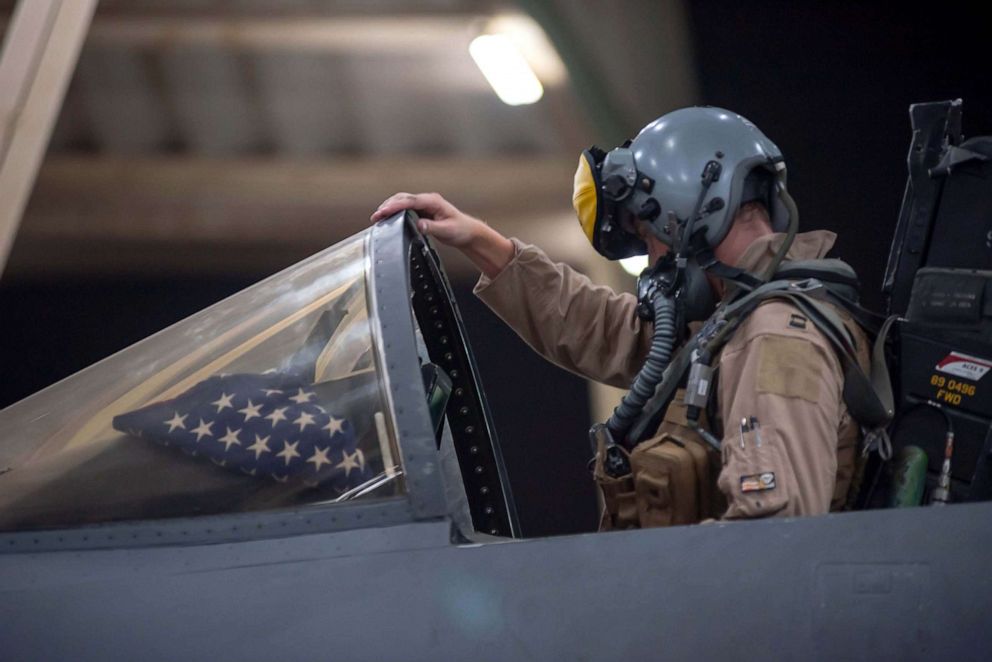 U.S. Air Force
“As they withdrew back into Syria, they looked at their future. And so they started sending out fighters, sending out logistics, sending out groups of people to either get back into maybe (internally displaced people) camps or refugee camps and try to blend back (in),” Seely said. “They’re trying to get logistics set up. They’re trying to conduct operations. They’re trying to refinance their operations.”
The U.S.-led coalition conducts airstrikes against the terror group but on the ground the approximately 5,000 American troops in Iraq are primarily in a train and advise role supporting Iraqi Security Forces.


